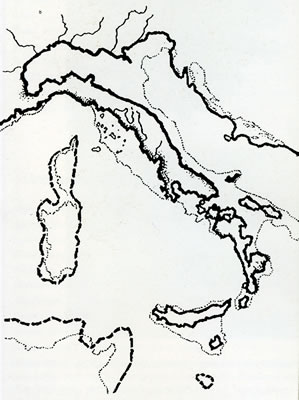
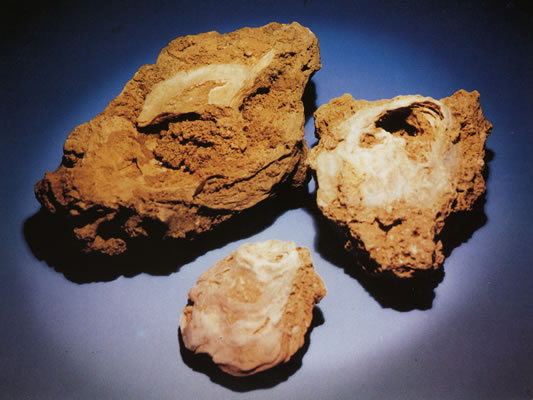
At the beginning of the Oligocene period, there was still a connection between the Tyrrhenian and the Adriatic Seas. Between the cretaceous plate of the Bari area and the Southern Apennines, the Saddle of Spinazzola formed a broad strait that linked the Ionian to the Adriatic Sea, in which today’s territory of Gioia del Colle was submerged. This assertion has been confirmed by the finding of marine fossils in our soils.
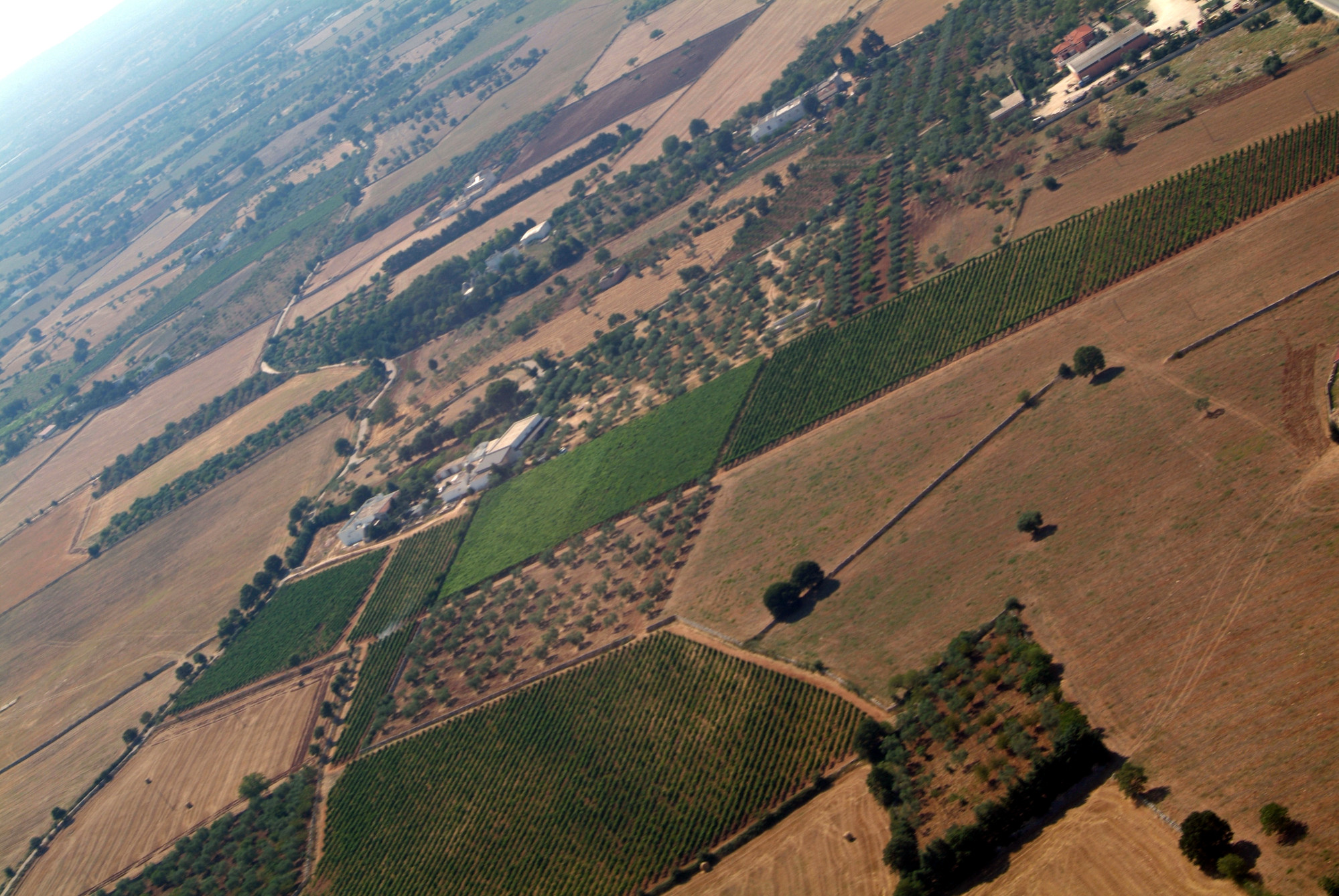
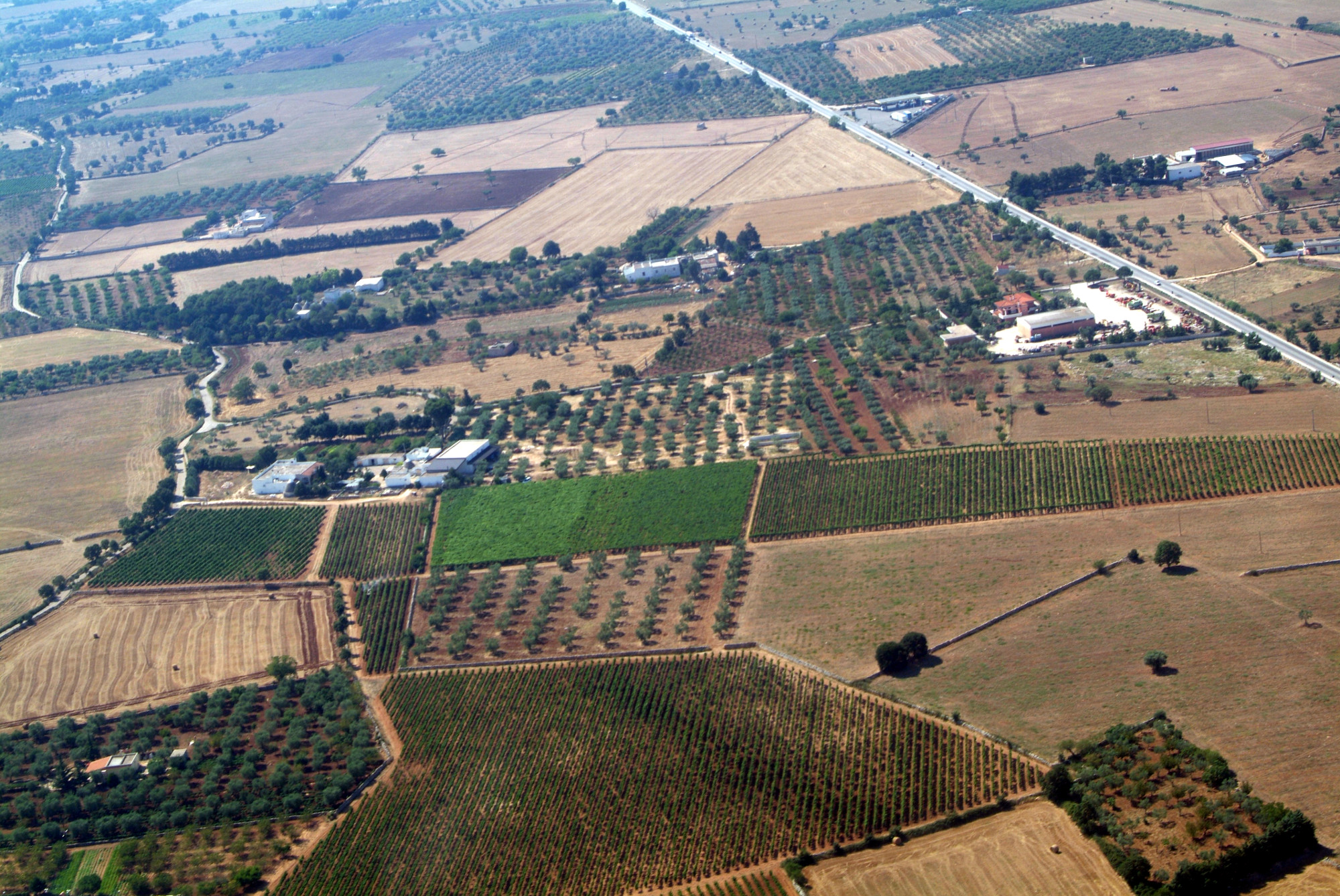
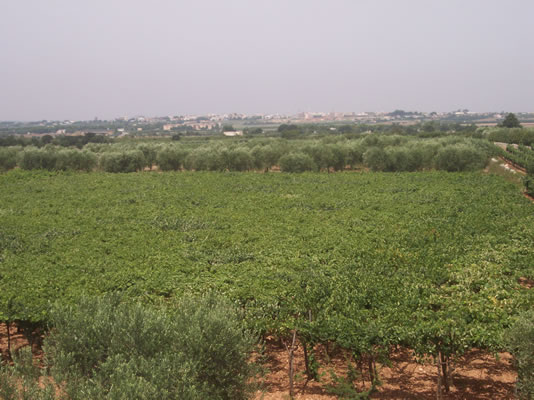
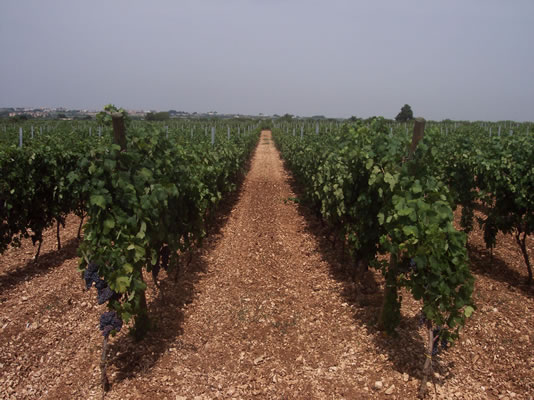
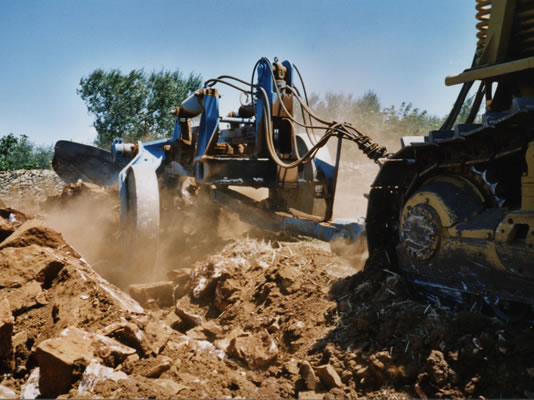
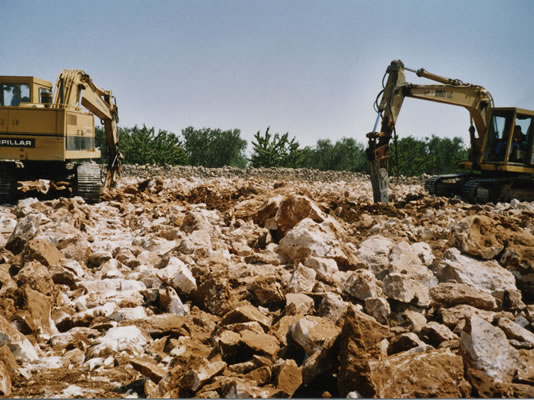
The noble Fatalone wines come from the country of the ancient Peucetians, on the Murgian rocky hills to the south of Bari, 365 metres above sea level, 45 km from the Adriatic Sea to the East and 45 km from the Ionian Sea to the South. The vines grow among huge stone blocks of sea origin, broken down to become an ideal home and a natural drainage system, providing the roots of the vines with essential nutriment and permanent freshness. The unusual freshness and minerality characteristic of our wines are due to this kind of soil.
Viticulture in our region has a long lasting tradition: excavations carried out in the archaeological site of Monte Sannace to the North-East of Gioia del Colle brought about the discovery of an extensive Peucetian settlement (VIII-III Century B. C.) and the recovery of numerous clay pottery once used for wine and olive oil.
Our territory is rich in considerable historic and touristic destinations such as the aforementioned site of Monte Sannace, the Norman-Swabian Castle and the Cathedral in Gioia del Colle, and just a short distance away the Grotte of Castellana, the Sassi of Matera, and the Trulli of the Valle d’Itria. It has a marked agricultural inclination, full of quality local products making it a real natural museum in the open air. The most prevalent cultivations are: vineyards, almond and olive groves, cherry and plum orchards. The hilly structure of these lands confer us with optimum climatic conditions for viticulture through the right balance of sun, winds prevalently from North and South, and mild temperatures, remarkably different from day to night. To complete the frame in which our autochthonous vines, Primitivo and Greco, can show their best, the soil…
The Soil
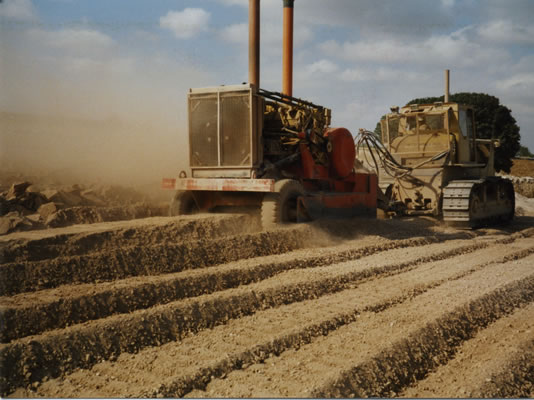
Our soil is a typical Murgian hilly karstic soil: a medium mix of clay and limestone, rocky-natured and rich in minerals. It’s composed of thin layers of red earth mixed with limestone and silica, on huge monolithic blocks, rich in marine fossils. The presence of fossils confirm the sea origin of these lands and allow us to assume that the ancient name of the locality Spinomarino evokes its original shape: a narrow strip of land in the strait of sea which once submerged the surrounding lowlands.